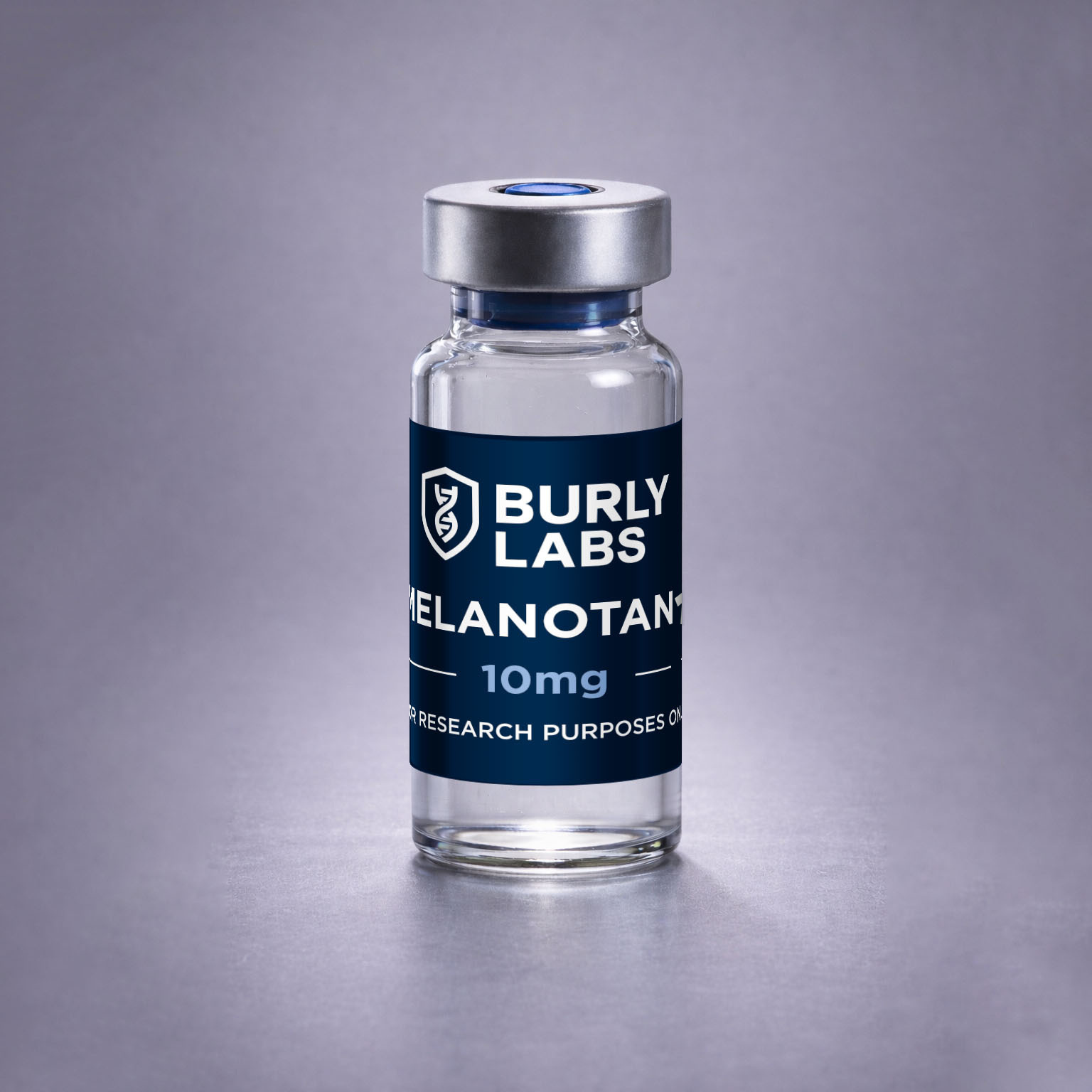
 Melanotan I (MT1) 10mg
$50.00
Availability: In stock

$50.00
Availability: In stock
Melanotan 1 (MT-1), pharmacologically represented by afamelanotide, is a synthetic analogue of α-melanocyte-stimulating hormone (α-MSH). Afamelanotide is a synthetic tridecapeptide that acts primarily as an agonist of the melanocortin-1 receptor (MC1R). The pharmaceutical compound contains 13 amino acids and has a molecular weight of approximately 1,646.85 Da. Its amino-acid sequence is Ac-Ser-Tyr-Ser-Nle-Glu-His-(D)Phe-Arg-Trp-Gly-Lys-Pro-Val-NH₂.
MC1R is a G-protein-coupled receptor (GPCR) expressed on melanocytes, the cells responsible for melanin synthesis. Under normal physiology, α-MSH produced from the proopiomelanocortin (POMC) pathway binds to MC1R following appropriate physiological stimuli, including ultraviolet radiation. Activation of MC1R increases intracellular cyclic adenosine monophosphate (cAMP) through stimulation of adenylyl cyclase. The resulting cAMP-dependent signaling regulates transcriptional processes involved in melanocyte function and melanogenesis.
A major downstream component of MC1R signaling is microphthalmia-associated transcription factor (MITF). Increased cAMP signaling activates protein kinase A and downstream transcriptional pathways involving CREB and MITF. MITF regulates the expression of several proteins required for melanogenesis, including tyrosinase (TYR), tyrosinase-related protein 1 (TYRP1), and dopachrome tautomerase (DCT/TYRP2). Increased expression and activity of these proteins promotes the synthesis of melanin within melanocytes.
Melanin synthesis occurs within specialized organelles called melanosomes. Tyrosinase catalyzes important reactions in the conversion of the amino acid tyrosine into melanin precursors. Subsequent enzymatic reactions produce either eumelanin or pheomelanin. Activation of MC1R favors the production of eumelanin, the brown-black form of melanin, rather than pheomelanin, which is associated with yellow-red pigmentation. MC1R signaling therefore influences not only the total quantity of melanin produced but also the relative composition of the melanin synthesized by the melanocyte.
Following synthesis and maturation, melanosomes are transferred from melanocytes to neighboring keratinocytes in the epidermis. The accumulation and distribution of melanin-containing melanosomes within keratinocytes produces increased pigmentation of the skin. Consequently, activation of MC1R by afamelanotide results in a biological increase in epidermal melanin rather than a chemical coloration of the skin surface. The FDA characterizes the pharmacodynamic effect of afamelanotide as an increase in eumelanin production that occurs independently of exposure to sunlight or artificial ultraviolet radiation.
The normal UV-induced tanning response involves a related pathway. UV radiation causes cellular responses in keratinocytes, including activation of p53-dependent signaling and increased expression of POMC-derived melanocortins. α-MSH subsequently interacts with MC1R on melanocytes, activating cAMP signaling and increasing MITF-dependent melanogenesis. Afamelanotide pharmacologically activates the same principal receptor pathway without requiring the initial UV-mediated signaling event.
The biological effects of MC1R activation extend beyond pigment synthesis. MC1R signaling has been associated with cellular antioxidant responses, regulation of inflammatory signaling, and DNA damage-response pathways. These effects are biologically related to the role of eumelanin and MC1R signaling in protecting melanocytes from environmental stress. However, the existence of these molecular effects does not establish a clinical therapeutic benefit for every condition in which MC1R signaling has been investigated.
Genetic variation in MC1R contributes to differences in pigmentation between individuals. MC1R contains numerous naturally occurring variants, some of which reduce receptor signaling. Reduced MC1R activity is associated with decreased eumelanin production, increased relative production of pheomelanin, lighter pigmentation, and reduced tanning responses. Afamelanotide has been studied in individuals with different MC1R variants, and clinical pharmacology data indicate that its pigmentation effect can occur across different genetic backgrounds.
This compound is supplied strictly for research use only. This compound is not intended for human or animal consumption, clinical use, diagnostic application, or therapeutic purposes.
Discount Applied Successfully!
Your savings have been added to the cart.
Melanotan I (MT1) 10mgAvailability: In stock